
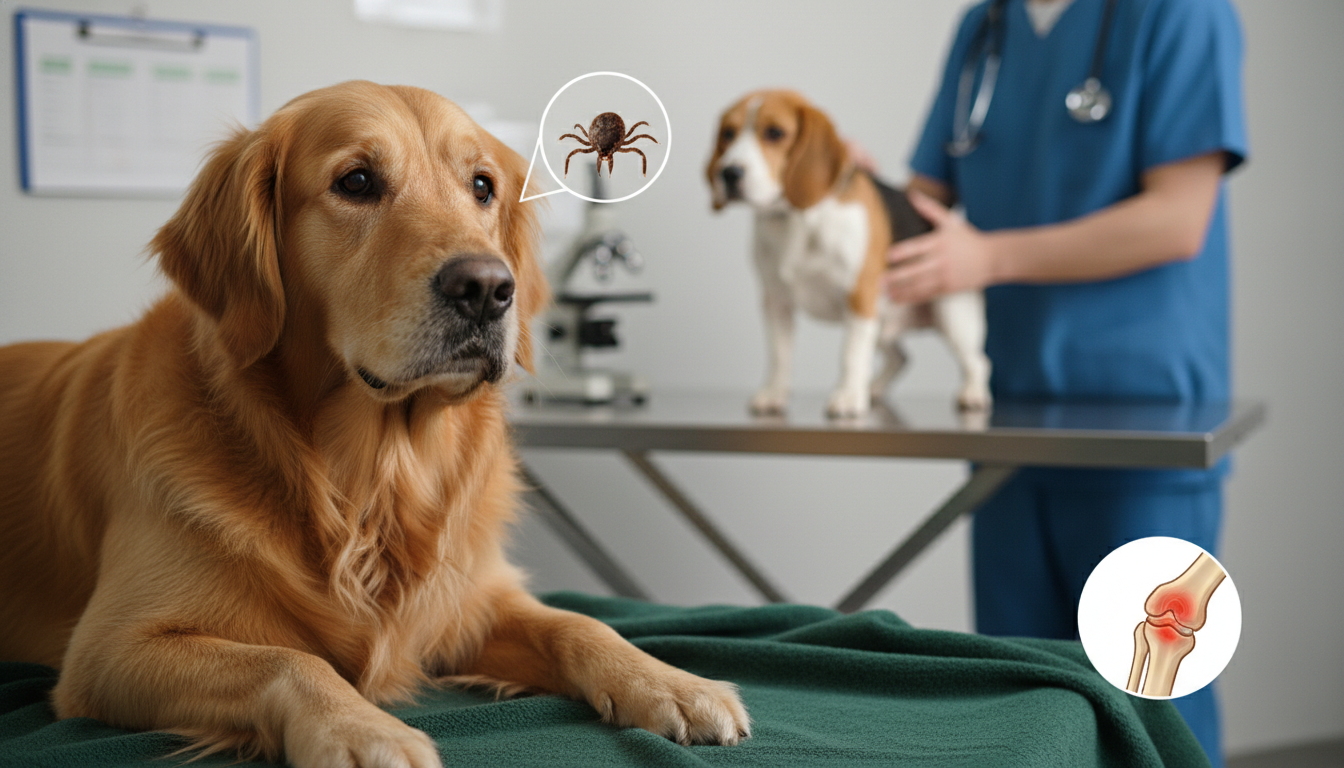
Executive Summary
Lyme disease in dogs is a significant health concern that manifests as a result of infection by the bacterium Borrelia burgdorferi, primarily transmitted through the bite of infected blacklegged ticks, also known as deer ticks (Ixodes scapularis). This zoonotic disease is prevalent across various geographical locations in the United States, especially in the Northeast and Upper Midwest. Not all dogs exposed to these ticks will contract Lyme disease, but early detection and intervention are crucial to minimize its long-term effects. As part of our commitment to offering comprehensive insights, our findings are informed by cross-referenced data with clinical experiences from our 7,000+ member community on OMG Share.
Pathology & Transmission
Lyme disease begins its insidious path once an infected tick attaches to a dog, typically in areas with thin fur or in moist environments. When the tick feeds on the host’s blood, the bacterium enters the bloodstream and disseminates throughout the body. The bacterium’s spiral shape makes it adept at evading the immune system, allowing it to penetrate tissues, particularly those surrounding joints and organs.
Upon invasion, Borrelia burgdorferi can trigger an immune response, leading to inflammation. This immune reaction exacerbates the disease’s symptoms, as it affects various organs such as kidneys and joints. Importantly, Lyme disease is characterized by a delayed onset of symptoms, often surfacing weeks to months after an initial tick bite, which adds to the complexity of diagnosis and treatment.
The Symptom Roadmap
Recognizing the symptoms of Lyme disease is paramount for early intervention. The disease typically presents in stages: early signs and more pronounced advanced clinical signs.
Early Red Flags
- Lethargy: Owners may notice their dogs being less active or displaying unusual fatigue.
- Fever: A spike in body temperature can occur, indicating infection.
- Joint Pain: Dogs may exhibit reluctance to move, jump, or play, as symptoms akin to arthritis arise.
These signs can often be subtle. Pet owners may attribute them to overexertion or other minor ailments.
Advanced Clinical Signs
- Swollen Joints: As the disease progresses, joints may become notably swollen and painful.
- Kidney Dysfunction: Kidney issues may manifest, particularly in chronic cases, leading to more severe health complications such as protein loss in urine.
- Neurological Symptoms: While rare, severe cases can lead to neurological manifestations, including seizures or behavioral changes.
Importantly, some symptoms may go unnoticed, contributing to a delay in diagnosis. Early recognition is vital for effective treatment.
Diagnostic & Treatment Protocols
Veterinarians utilize several diagnostic tests to confirm Lyme disease. The most common are Enzyme-Linked Immunosorbent Assay (ELISA) tests, which detect antibodies against Borrelia burgdorferi, and polymerase chain reaction (PCR) tests that amplify the organism’s DNA. The SNAP test is also commonly employed; it provides results quickly and can detect other tick-borne diseases simultaneously.
Once confirmed, the standard treatment protocol typically involves:
- Doxycycline: The cornerstone of Lyme disease treatment, doxycycline is usually administered for four weeks. It halts the growth of the bacterium, alleviating symptoms rapidly in many cases.
- Symptomatic Treatment: Non-steroidal anti-inflammatory drugs (NSAIDs) may be prescribed to manage pain and inflammation associated with joint involvement.
- Monitoring: Follow-up tests may be necessary to assess kidney and overall health, particularly in advanced cases.
In more severe or chronic cases, additional therapies may be considered, including hospitalization for intravenous fluids or more aggressive medical interventions.
The Prevention Shield
The best defense against Lyme disease is proactive prevention. FDA-approved preventive measures such as NexGard or K9 Advantix II target tick infestations effectively. These products not only repel ticks but also interrupt their feeding cycle, significantly reducing the chances of disease transmission.
In addition to medication, maintaining a tick-free environment is crucial. This includes:
- Lawn Maintenance: Regularly mow the grass and remove leaf litter, which provides a conducive habitat for ticks.
- Tick Checks: Upon returning from outdoor activities, inspect your dog for ticks, especially in the ears, armpits, and areas around the tail.
- Vaccination: While there is no vaccine for Lyme disease specifically, vaccinations against other tick-borne diseases can provide added layers of protection and should be discussed with your veterinarian.
Defending Your Pack
Lyme disease poses a significant and sometimes hidden risk to our canine companions. It is vital for pet owners to be vigilant, recognizing symptoms early and pursuing preventive strategies vigorously. With established screening and treatment protocols, most cases of Lyme disease can be managed effectively, resulting in a full recovery.
Engagement in regular discussions with your veterinarian about tick prevention and early symptom recognition can save lives. Let’s ensure our dogs remain safe and healthy while enjoying the great outdoors.
FAQs
- How is Lyme disease transmitted to dogs? Lyme disease is transmitted through the bite of infected blacklegged ticks.
- Can humans get Lyme disease from dogs? Though Lyme disease is primarily a concern for dogs, humans can contract it through ticks, emphasizing the importance of prevention in both species.
- What are the long-term effects of Lyme disease on dogs? If untreated, Lyme disease can lead to chronic joint issues or kidney problems over time.
- How long does it take for symptoms to appear in dogs after a tick bite? Symptoms can manifest as early as 2 to 5 months after exposure, which complicates timely diagnosis.
- Are there any vaccines for Lyme disease in dogs? Currently, there are vaccines available to prevent Lyme disease, but consulting your veterinarian for recommendations based on regional risk is advisable.
- What should I do if I suspect my dog has Lyme disease? Contact your veterinarian immediately for a comprehensive examination and appropriate testing.